

The days of passive scrolling are dead. In 2026, the Instagram algorithm no longer rewards content simply for being watched. Meta’s engineering teams have heavily weighted the recommendation engine toward immediate, quantifiable interaction. Reaching the Explore page or the Reels feed algorithmically requires an aggressive engagement strategy. This shift is the mathematical reason why creators have abandoned standard bio links and moved entirely to automated comment-to-DM funnels.
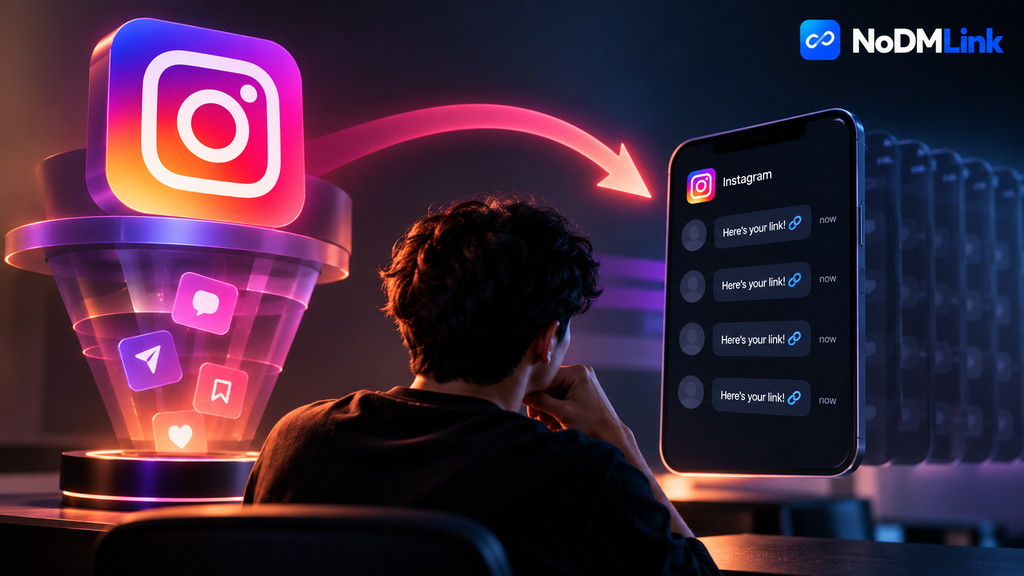
Table of Contents
- The Death of Passive Reach
- Calculating the Engagement Threshold
- Why Bio Links Are Algorithmically Punished
- The DM Multiplier Effect
- Frequently Asked Questions (FAQ)
The Death of Passive Reach
Three years ago, high retention rate (watch time) was the golden metric. If a user watched a 15-second Reel twice, the system flagged it as high quality. This led to a flood of short, looping videos with massive view counts but zero community interaction. Instagram realized this passive consumption was causing users to close the app faster because they felt disconnected.
To combat churn, the algorithm was rewritten. Watch time is now only a baseline prerequisite. The system now filters content through an active interaction matrix. If your video does not generate a comment or a share within the first 100 views, its reach velocity drops to near zero.
Calculating the Engagement Threshold
The Instagram API relies on a points-based threshold to determine if a piece of content is pushed to a wider non-follower audience. While Meta does not publish the exact source code, extensive A/B testing across thousands of creator accounts reveals a clear hierarchy of interaction value.
- Like: 1x weight. Easy to perform, low intent.
- Save: 3x weight. Indicates the user found long-term value.
- Comment: 5x weight. Requires typing and active thought.
- Share to DM: 10x weight. Expands the network graph by bringing another user into the session.
Creators realized that asking a user to “click the link in bio” generates 0 algorithmic points. However, asking a user to “Comment ‘SHOP’ to get the link” generates a 5x weight score per interaction. If 1,000 users want a product link, forcing them to comment first injects 5,000 algorithmic points into the Reel’s score. This artificial boost forces the algorithm to trigger a viral push.
Why Bio Links Are Algorithmically Punished
Instagram makes money on attention. Every second a user spends inside the app increases ad revenue. When a creator tells an audience to leave the app via a Linktree or external bio link, they are actively hurting Meta’s bottom line. The algorithm is designed to detect and throttle content that aggressively drives traffic off-platform.
By shifting to DM automation, the creator keeps the user inside the Instagram ecosystem. The user comments, opens their DMs, and interacts with a bot. They are still in the app. Instagram rewards this behavior because it increases the overall session duration.
The DM Multiplier Effect
The interaction does not stop at the comment. When the ManyChat or Chatfuel bot replies to the user in their DMs, it opens a direct message thread. If the user clicks the link inside that DM, Instagram logs another interaction event.
This creates a feedback loop:
- The user comments on the Reel (High value signal).
- The creator (via bot) sends a DM.
- The user opens the DM and clicks the CTA (High value signal).
This double-layered engagement tells the algorithm that the creator is fostering deep, one-on-one relationships with their audience. The creator’s future content is then heavily prioritized in that specific user’s feed. It is an incredibly effective growth mechanism, even if it creates friction for the end-user. If you want to bypass this entire process and extract the destination link instantly, tools like NoDMLink skip the engagement trap entirely.
Frequently Asked Questions (FAQ)
Is Instagram going to ban DM automation?
Highly unlikely. Meta makes money when businesses succeed on their platform. They built the Messenger API for exactly this purpose. Banning it would alienate major advertisers and creators.
Can the algorithm detect fake or forced comments?
The algorithm can detect bot farms (fake accounts spamming emojis). It does not penalize legitimate users typing a specific keyword to trigger a webhook, because the account authority of the commenter is real.
Why do some creators still use bio links?
Usually, they lack the technical knowledge to set up webhooks, or they are promoting a massive catalog of items (like a full Amazon storefront) where a single keyword trigger is not practical. However, their reach is mathematically lower than those using automation.