

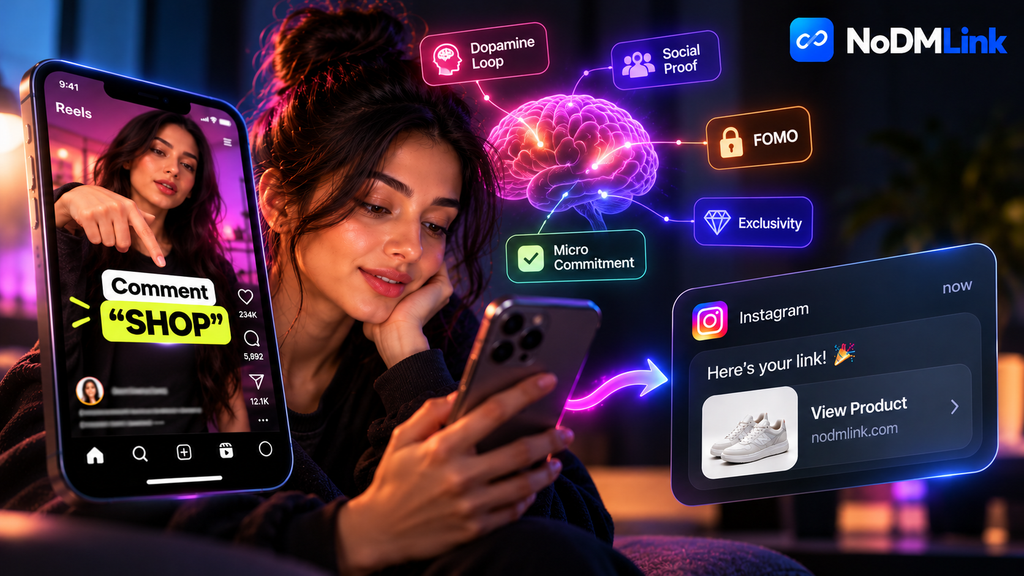
Why does typing a simple four-letter word make a user significantly more likely to purchase a product? The “Comment LINK” strategy dominating Instagram and TikTok is not just a technical workaround for the algorithm. It is a calculated application of behavioral psychology. By forcing a viewer to comment on a Reel to receive a direct message, creators weaponize micro-commitments, social proof, and the illusion of exclusivity to turn passive scrollers into active buyers.
Table of Contents
- The Power of the Micro-Commitment
- Gamification and the Dopamine Loop
- FOMO and Social Proof in the Comments Section
- The Illusion of Exclusivity
- Frequently Asked Questions (FAQ)
The Power of the Micro-Commitment
In sales psychology, the “foot-in-the-door” technique states that agreeing to a small request increases the likelihood of agreeing to a larger one. Social media scrolling is inherently passive. A user leans back and consumes content with zero physical or mental investment.
When a creator tells a viewer to “Comment SHOP,” they are asking for a micro-commitment. The user must stop scrolling, open the keyboard, and type the word. This physical action shifts their brain from a passive state to an active one. Cognitive dissonance theory explains that because the user expended physical effort to acquire the link, they subconsciously assign a higher monetary or practical value to the destination URL to justify the effort spent. This initial investment drastically reduces the bounce rate. Traffic analytics repeatedly show that users who arrive at a Shopify store via an automated DM have session durations 3x longer than those who clicked a static bio link.
Gamification and the Dopamine Loop
Clicking a static link in a bio is a sterile transaction. Commenting to receive a DM introduces gamification. The user performs an action (commenting) and anticipates a reward (the automated message notification).
This anticipation triggers a minor dopamine release, mirroring the variable ratio schedule used in slot machines. When the Instagram notification pops up stating the creator has sent a message, the brain registers it as a completed quest. Because Instagram’s infrastructure sometimes processes these API requests with a 2 to 5-second delay during high server loads, this brief waiting period actually amplifies the anticipation. This positive chemical feedback loop makes the user far more receptive to the affiliate link waiting inside the chat window. They are no longer just clicking a URL; they are claiming their prize.
FOMO and Social Proof in the Comments Section
Humans are herd animals. We look to others to determine what is valuable. If a user sees a video about a new desk lamp and the creator simply puts the link in their bio, the comments section might be empty. The user has no data on whether anyone else cares about the product.
By forcing users to comment for the link, the creator artificially generates massive social proof. When a user opens the comments and sees 15,000 other people typing “LAMP”, it immediately validates the product’s worth. This triggers FOMO (Fear Of Missing Out). The user assumes that if 15,000 people want this item, it is high quality and will likely sell out, prompting them to comment and buy it immediately to secure their own unit.
The Illusion of Exclusivity
The phrasing used in these videos is deliberate. Creators say, “I will send it straight to your DMs.” This language mimics a private, 1-on-1 interaction. Even though the user is communicating with a ManyChat API bot that is simultaneously messaging 50,000 other people, the delivery method feels exclusive.
A public bio link feels generic and available to everyone. A direct message feels personal. This perceived intimacy increases trust, which directly correlates to higher conversion rates on high-ticket affiliate items. The user feels they are being handed a VIP pass to a storefront rather than just browsing a public catalog.
However, consumer awareness is shifting. As users recognize the backend automation, the illusion shatters. The process transforms from an exclusive interaction into an annoying hurdle. This fatigue is exactly why users seek out tools like NoDMLink to bypass the psychological manipulation, extract the destination URL instantly, and regain control of their shopping experience.
Frequently Asked Questions (FAQ)
Do users realize they are talking to a bot?
Most users understand it is an automated system, but the psychological triggers still fire. The micro-commitment is made, and the social proof in the comments remains visible, meaning the psychological pressure to purchase is still active regardless of the delivery mechanism.
Why do creators ask for specific words like “SUMMER” instead of just “LINK”?
Specific keywords allow creators to segment audience intent on the backend. If a creator posts two outfits in a video, asking users to comment “RED” or “BLUE” triggers different automated workflows. This ensures the user gets the exact product they want, increasing the conversion rate, while providing the creator with valuable data on audience preferences.
Does this strategy work on older demographics?
Data shows a significantly higher drop-off rate among older users. They often do not understand why a comment triggers a message, or they have strict privacy settings enabled that block the automated DM from arriving entirely. This strategy is most effective on Gen Z and Millennial audiences accustomed to platform-native automation workflows.