

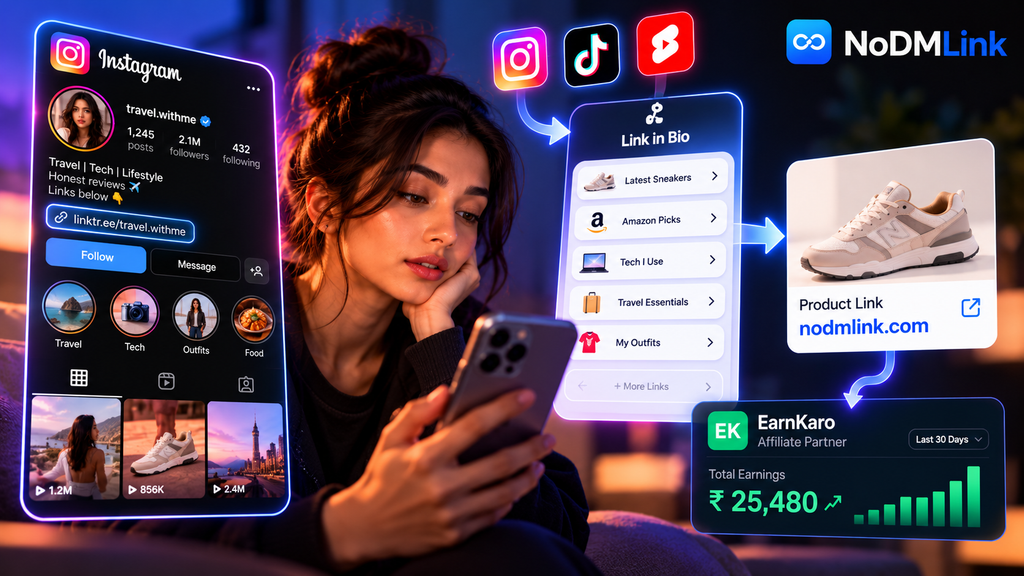
The “Link-in-Bio” industry exists solely because of a rigid software constraint. Social media platforms like Instagram and TikTok restrict accounts to a single, clickable hyperlink on their public profile, while completely disabling clickable URLs inside standard video captions. This technical bottleneck forced creators to build micro-landing pages that serve as centralized traffic routers, housing dozens of URLs behind one master link.
Table of Contents
- The Single-URL Limitation
- How a Link-in-Bio Platform Works
- Key Features of Modern Platforms
- The Top Platforms Compared
- The Decline of the Bio Link
- Frequently Asked Questions (FAQ)
The Single-URL Limitation
Social media architectures are designed for retention. If a user clicks an external link to a YouTube video or an Amazon product, the social platform stops serving them ads. To combat this, Meta and ByteDance aggressively throttle external routing. By limiting accounts to one profile link and disabling text hyperlinks in captions, the platforms successfully trap the majority of user traffic inside their walled gardens.
Before Link-in-Bio tools existed, a creator promoting a new shoe had to paste the specific Amazon URL into their profile. If they posted a video about a jacket the next day, they had to delete the shoe URL and replace it with the jacket URL. Users watching the older video would click the profile link and land on the wrong product. This broken UX created the demand for a permanent directory page.
How a Link-in-Bio Platform Works
At its core, a Link-in-Bio page is an extremely lightweight, mobile-first HTML document. When a creator signs up for a service like Linktree, the platform generates a unique subdomain (e.g., linktr.ee/username).
This master URL is pasted into the Instagram profile. When a user clicks it, the Instagram in-app browser renders the micro-landing page. The page consists of a vertical stack of CSS-styled <a href="..."> tags. Because these pages expect massive, sudden spikes in concurrent traffic (when a video goes viral), they rely heavily on Content Delivery Networks (CDNs) and aggressive edge caching to maintain sub-second load times.
The backend of the platform provides the creator with a graphical dashboard to add, remove, and reorder links via a database, which instantly updates the live frontend interface without requiring the creator to write code.
Key Features of Modern Platforms
Basic URL routing is no longer sufficient. Modern Link-in-Bio platforms operate as full-stack creator hubs integrating third-party APIs.
- Data Tracking: Creators can inject Facebook Pixels or Google Analytics tracking IDs into the page header, allowing them to retarget users who visited the bio page but did not purchase.
- Email Capture: Integration with Mailchimp or ConvertKit APIs allows users to subscribe to a newsletter directly on the bio page without navigating to a separate site.
- Native Commerce: Advanced platforms embed Stripe checkout modules directly into the bio page, allowing users to purchase digital downloads or book consultations seamlessly.
The Top Platforms Compared
The market is saturated, but three platforms dominate the creator economy:
1. Linktree: The original pioneer. It offers a highly recognizable, clean UI. However, its free tier is notoriously restrictive, locking essential analytics and custom branding behind a monthly paywall.
2. Beacons: Built specifically for modern influencers. Beacons offers a superior free tier compared to Linktree, including native e-commerce blocks and an auto-updating media kit that pulls live subscriber data from YouTube and Instagram APIs.
3. Stan Store: A premium platform engineered for digital product sales. Instead of routing traffic away to external sites, Stan Store focuses on frictionless, 1-tap checkouts directly inside the bio link.
The Decline of the Bio Link
Despite their popularity, Link-in-Bio pages suffer from a massive conversion flaw: The Paradox of Choice. When a user wants a specific product but clicks a bio link containing 15 different buttons, they experience cognitive overload. The friction of hunting for the correct link causes severe bounce rates.
This inefficiency is why creators are abandoning bio links in favor of direct DM automation. By forcing users to comment for a specific link, the creator bypasses the bio page entirely, delivering the exact URL directly to the user’s inbox. For users who prefer not to engage with automated bots, lookup directories like NoDMLink provide a direct search mechanism to find the exact destination URL instantly, further negating the need for a cluttered bio page.
Frequently Asked Questions (FAQ)
Do Link-in-Bio pages hurt SEO?
If you own a primary website (e.g., your own blog), routing traffic through a third-party Linktree deprives your actual domain of direct referral traffic and backlinks. It is always better for SEO to build a custom landing page on your own domain (e.g., yourwebsite.com/links) and place that in your bio.
Can you build your own Link-in-Bio page?
Yes. Any developer can build a fast, responsive bio page using basic HTML and CSS, hosted for free on platforms like Vercel or GitHub Pages. This eliminates monthly subscription fees and grants total control over the analytics and tracking scripts.
Is Instagram blocking Linktree links?
Historically, Instagram’s spam filters have temporarily flagged Linktree subdomains due to malicious users mass-creating free accounts to host phishing links. While rare today, relying on a shared third-party domain always carries a slight risk of platform-wide blacklisting.