

The current “Comment LINK to get a DM” ecosystem dominating Instagram and TikTok is a temporary behavioral workaround, not a permanent technical architecture. It exists solely to bridge the gap between algorithmic engagement requirements and external e-commerce routing. However, as user fatigue peaks and artificial intelligence matures, the method by which consumers discover products in short-form video is poised for a massive transformation.
Table of Contents
- Peak DM Fatigue and Spam
- Platform-Native Shopping Integrations
- AI-Driven Product Recognition
- Decentralized Link Discovery
- Frequently Asked Questions (FAQ)
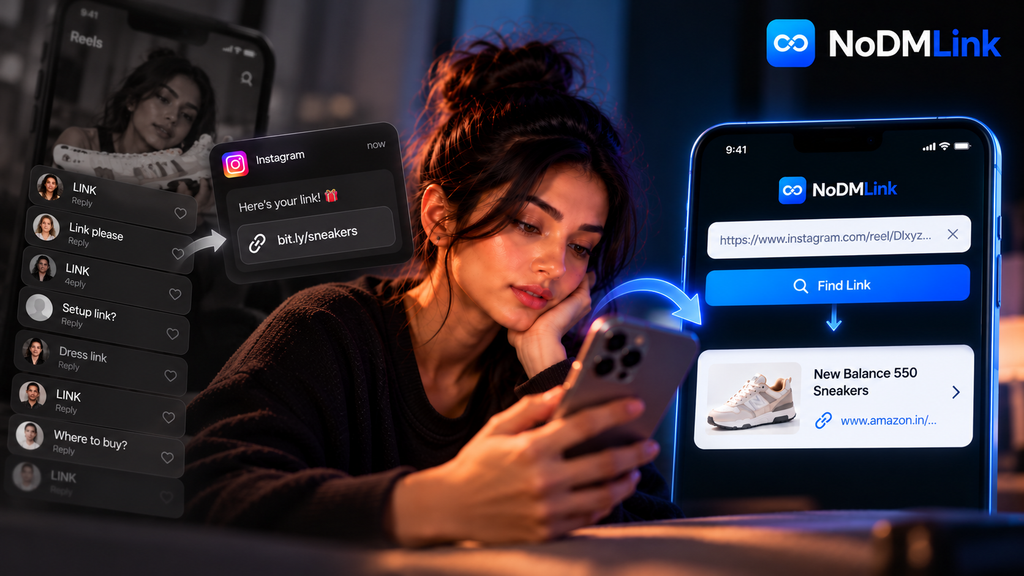
Peak DM Fatigue and Spam
The core vulnerability of the DM automation strategy is user friction. While it currently yields high conversion rates, the novelty is rapidly wearing off. Comment sections on viral Reels have devolved from community discussions into sterile walls of automated keyword spam (e.g., “LINK”, “SETUP”, “DRESS”).
Users are becoming increasingly agitated by the artificial hurdle. The requirement to engage publicly just to view a product price feels manipulative. In software UI/UX design, whenever a workflow introduces artificial friction, a third-party tool inevitably emerges to bypass it. This growing resentment is the primary catalyst driving users toward external lookup directories rather than participating in the comment-bot loop.
Platform-Native Shopping Integrations
Social networks do not want creators sending traffic to Amazon or Shopify. They want the entire transaction to occur inside their application ecosystem so they can capture the payment processing fees and the purchase data.
TikTok Shop is the most aggressive iteration of this. By allowing users to buy a product directly within the video feed, TikTok eliminates both the Link-in-Bio and the DM automation requirement. However, this native integration threatens the traditional creator affiliate model. Creators often prefer external links because third-party networks (like Amazon Associates) offer more reliable tracking cookies and broader product catalogs. The future will be a tug-of-war between platforms trying to close the loop and creators trying to force traffic outward.
AI-Driven Product Recognition
The most disruptive technological shift on the horizon is computer vision and AI-driven object recognition. Currently, if a creator does not provide a link to the lamp in the background of their video, the user cannot easily find it.
In the near future, advanced iterations of tools like Google Lens will be integrated natively into mobile operating systems, allowing users to pause a video, tap on an item, and instantly receive a list of purchasing options. This completely decentralizes the affiliate power. If an AI can identify the product and surface a generic Amazon link, the creator loses the ability to gatekeep the URL behind a “Comment LINK” requirement, effectively destroying the DM automation funnel.
Decentralized Link Discovery
Before AI fully masters real-time video object recognition, the immediate future of link discovery lies in decentralized, community-driven repositories. Users are already rejecting the walled-garden approach of platform-controlled routing.
This is where tools like NoDMLink represent a structural shift. By decoupling the video content from the destination link, NoDMLink acts as an independent routing layer. Users can find the specific social media video on the NoDMLink platform and instantly access the underlying URL, bypassing the creator’s engagement funnel and the platform’s restrictive architecture. This open-directory model restores efficiency to the shopping experience and protects the user from blind redirects.
Frequently Asked Questions (FAQ)
Will platforms like Instagram ban DM automation tools?
It is unlikely they will outright ban them in the near term, as tools like ManyChat are official Meta Business Partners. However, platforms may begin throttling the algorithmic reach of videos that aggressively rely on engagement-bait tactics, forcing creators to find organic ways to share links.
Will the Link-in-Bio page become obsolete?
The Link-in-Bio will survive, but its primary function will shift. Instead of serving as a high-volume sales funnel, it will revert to a traditional portfolio or digital business card—housing permanent assets like a creator’s media kit, primary website, and newsletter signup, rather than individual product links.
How does decentralized discovery benefit the consumer?
Decentralization removes the artificial friction created by marketing algorithms. It allows consumers to immediately inspect a destination URL for security purposes, compare prices, and complete a transaction without sacrificing their data to tracking bots or inflating a creator’s engagement metrics against their will.